

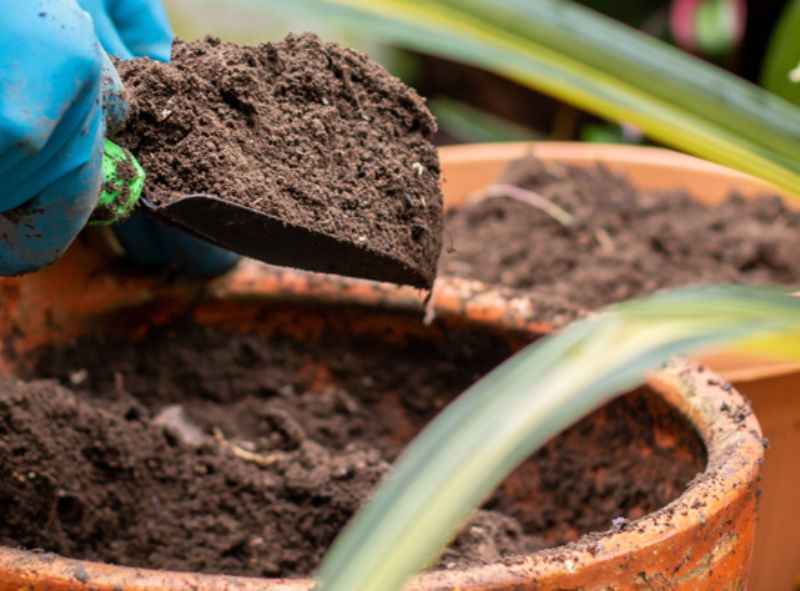
For your houseplants to truly thrive, choosing a quality compost is key. This guide walks you through how to pick the right one for your plants.
The essential elements of a quality compost for your houseplants
A good compost stands out thanks to the combination of several natural components, each playing a specific role in ensuring the health and growth of your plants.
Black peat
Black peat, extracted from the deeper layers of the bog, is a key component of compost. It is particularly valued for its ability to absorb and retain water, ensuring continuous hydration even during periods of frost.
White peat
Coming from the upper layers of the bog, white peat stands out for its lightness and ability to retain nutrients.
And fun fact: it can absorb up to eight times its weight in water, making it ideal for maintaining a constant level of moisture.
Wood fibre
Wood fibre, used as a sustainable alternative to peat, contributes to the aeration of the compost while ensuring good moisture retention. Often produced locally, it can be a more eco-friendly and cost-effective option.
Lime
To regulate the natural acidity of peat, lime is added to the compost. This pH adjustment is essential for houseplants to absorb nutrients in an optimal way.
Fertiliser
Fertilisers enrich the compost with essential nutrients, enabling vigorous growth in plants. Enriched composts generally contain fertilisers that release nutrients over a period of 6 to 8 weeks.
Additives to improve your compost
To meet the specific needs of different plants, various additives can be incorporated into the compost. These elements improve structure, water retention and nutrient availability.
Coconut fibre
Coconut fibre increases the compost's capacity to retain water and nutrients. They promote an aerated soil structure.
Tree bark
Tree bark helps to improve drainage and aeration of the compost, which is crucial for plants that need well-drained soil.
Clay and sand
Clay helps to retain moisture and nutrients, while sand improves drainage. Together they make the perfect blend to create a balanced growing environment for your plants.
Compost for specific houseplants
Cactus compost
Succulents (or cacti) tend to thrive in poor, dry soils. Cactus-specific compost is rich in solid materials to ensure optimal drainage.
To ensure good drainage, you can add two thirds of coarse sand or clay pebbles if you are using a universal compost.
Orchid compost
Orchids are epiphytic plants that grow by clinging to trees. Their roots absorb nutrients from the air and do not need a growing medium like compost to develop.
The specific substrate for orchids is mainly made up of maritime pine bark mixed with peat, rock wool or perlite to reproduce these natural growing conditions.
How to choose the right compost
When it comes to choosing a compost, quality is everything.
Here are a few criteria to help you make the right choice:
RHP certification
The RHP certification of a compost ensures not only quality and safety, but also the absence of harmful substances and air-friendly production.
Benefits of a quality compost
A quality compost makes caring for your plants easier by reducing weed growth, cutting down on watering needs and encouraging stronger growth and more abundant flowering.
It also offers greater safety for people and animals, and ensures healthy root development.
Choosing a good compost — and above all one suited to your plants — is crucial for their health and growth. Make sure you select a compost tailored to the specific needs of your plants to give them the best possible growing conditions.


