

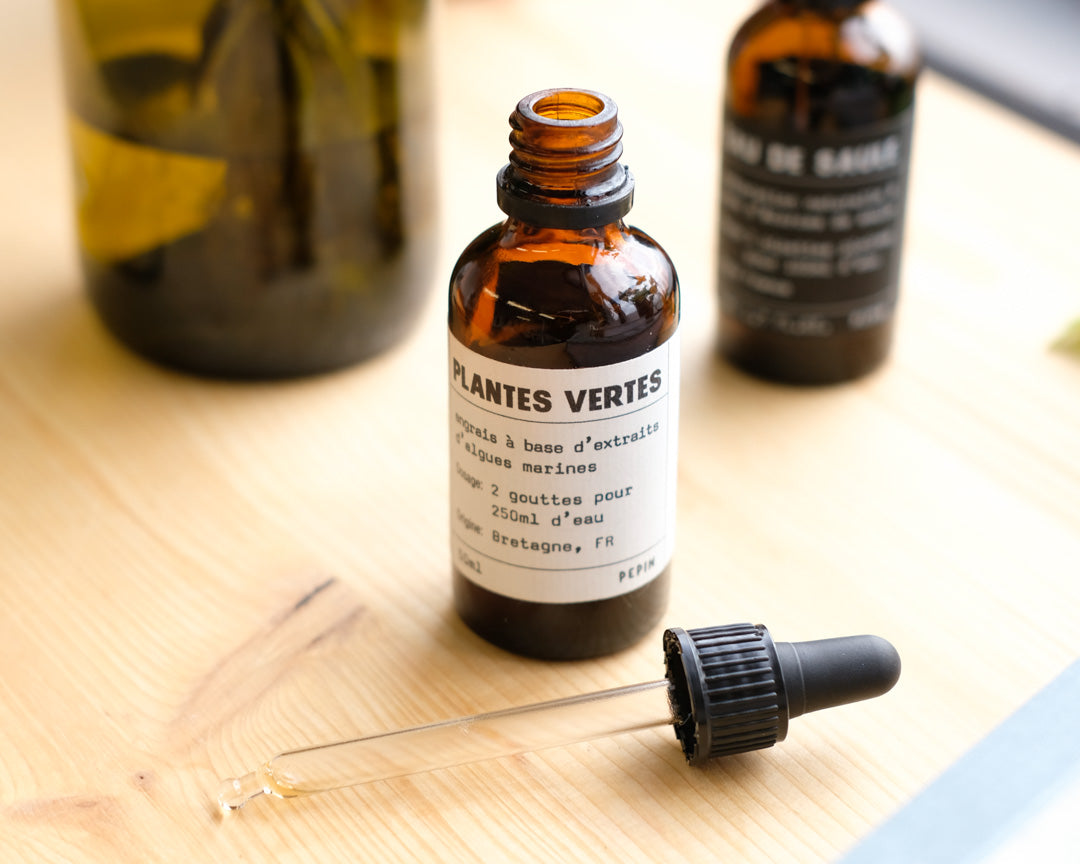
Knowing when it's time to feed your houseplants, and which houseplant fertiliser to use, is a challenge even for the most experienced houseplant collectors.
Watering, light or pest problems can be solved by reacting to an observation, but it's much harder to know when our houseplants need fertilising. There's no clear signal, except perhaps slowed or stagnant growth — but that's difficult to measure.
So instead of waiting for a signal from the plant, you'll need to take matters into your own hands and think of fertilising as a marathon. A houseplant fertiliser is used on a schedule based on the plant's growth cycle. And this should primarily follow the seasons. Each houseplant has slightly different needs when it comes to the quantities and frequency of fertiliser applications, but there's no need to overcomplicate the process.
The vast majority of common houseplants have sufficiently similar fertiliser needs to establish a schedule applicable to almost all plants, without the risk of over-fertilising. Some houseplants are more demanding than others, it's true. And the best way to address this is to choose a fertiliser whose composition is suited to the plant family (succulent, epiphyte, green plant, etc.).
Here is a suggested fertilising schedule for the most common houseplants. It is based on the seasonal growth cycle of plants which, even though they are indoors where temperatures are more constant, influences houseplants in a similar way to outdoor plants.
Fertilising your houseplants in spring
You can start fertilising your houseplants about 8 weeks before the last spring frost. As in the vegetable garden, the Ice Saints (which fall around 11th, 12th and 13th May) are an ancestral reference point that has stood the test of time.
This means starting to apply fertiliser in mid-March. At this time, the days begin to lengthen noticeably and houseplants shift from a semi-dormant state into a period of active growth.
If you are using a liquid fertiliser, apply half the recommended dose once a month until summer. This way, your houseplants will be nourished at a time when they are only just preparing for active growth and do not yet need large quantities of nutrients to support intense photosynthesis or flowering.
Fertilising your houseplants in summer
When summer arrives, it's time to move on to a more regular fertilising schedule for your houseplants. The frequency of summer fertiliser applications depends on the type of fertiliser you are using.
Natural liquid fertilisers are applied more frequently, every two weeks, or every week for fast-growing plants. Granular products should be used less frequently, roughly once a month or every two months. Slow-release fertilisers for houseplants break down slowly and release their nutrients in small quantities over a long period. A single application of most of these products lasts three to four months.
Follow this schedule whether or not you move your houseplants outside for the summer. Houseplants are in an active growth state when summer light levels are high, whether they are exposed to the constant temperatures of a domestic environment or the unpredictability of a patio or terrace.
Fertilising your houseplants in autumn
About 8 weeks before the first expected autumn frost, reduce the quantities and frequency of your fertiliser applications. This means that from mid-August, you can halve the amount of fertiliser and extend the interval between two applications.
As they enter dormancy, plants will focus on root activity to accumulate nutrients for the following year. Their needs are nonetheless lower, and they will be able to absorb the residues present to balance your growing medium.
Fertilising your houseplants in winter
Most houseplants are not in an active growth phase during winter and should therefore not be fertilised. There are a few exceptions to this rule. Some plants such as orchids, for example, can remain in bloom throughout winter if they have sufficient nutrients and light. In this case, applying a half-dose of liquid fertiliser in the middle of winter can be considered.
The repotting case: If you have just repotted your plant with a good quality compost, you can hold off on applying any fertiliser for the first 1 to 2 months.
Outside temperate climates: This schedule works on the assumption that you live in a temperate climate. In a climate that does not experience regular winter frosts, continue to fertilise your houseplants throughout winter, but do so at half the quantity and frequency of your summer applications. Again, this is due to light levels rather than temperatures. And if you live in a tropical climate, where it is permanently warm, continue to fertilise your houseplants on a summer schedule all year round.


