

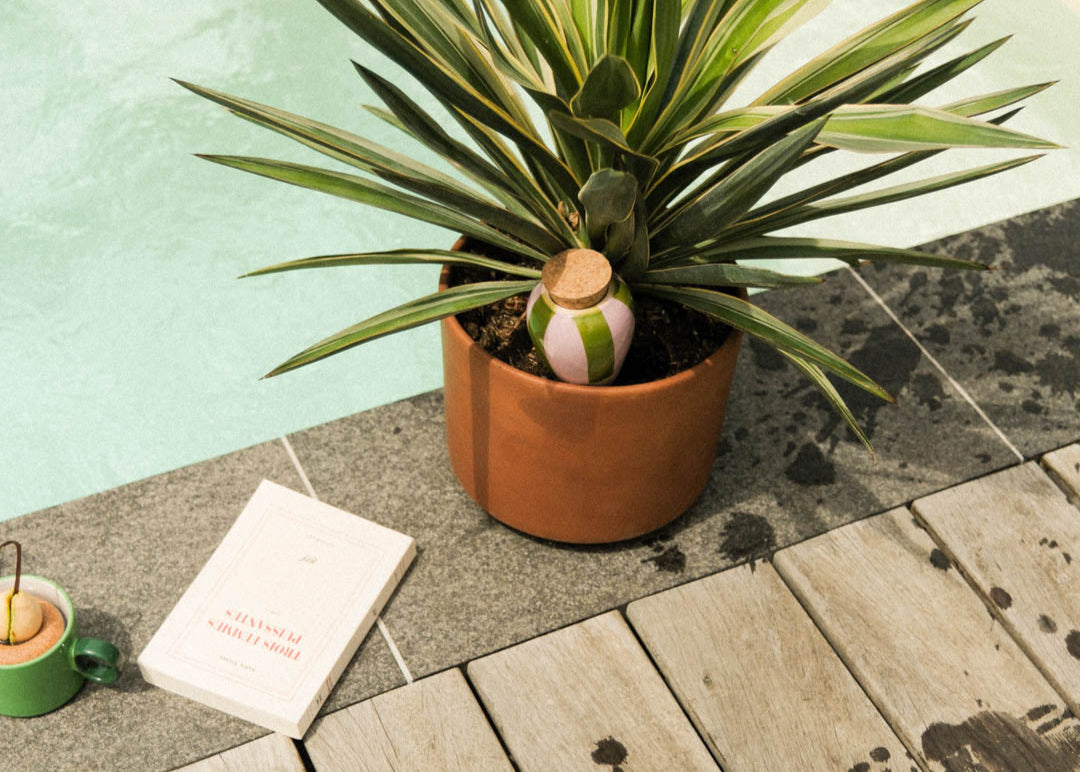
The universal problem of watering before you leave
The suitcase is packed, the ticket is on your phone, the keys are with the neighbour. And then that little voice pipes up: "But… my plants?" You know that moment. The one where you look at your monstera with a mix of guilt and helplessness. The question of watering your plants while on holiday comes up every summer, every long weekend, every spontaneous getaway. And it takes the edge off the excitement of leaving.
You're not alone. It's estimated that more than 60% of houseplants suffer from improper watering – too much or not enough. Extended absences are among the leading causes of plant loss. So, how do you water your plants on holiday without cobbling together a system worthy of NASA and without begging an already overstretched friend? That's exactly what we're going to look at together. And the answer is much simpler than you might think.
The classic solutions: practical or actually effective?
Before we reveal our favourite solution, let's run through the methods everyone has already tried (or considered) when wondering how to water their plants on holiday.
Asking a neighbour or friend. It's the first idea that comes to mind. Simple in theory, but in practice? You're depending on someone, with the risk that they water too much, not enough, or forget entirely. Not to mention that slight feeling of being in their debt when you get back.
Automatic watering systems for houseplants. Timers, electric drip systems, connected kits… Technically, they work. But the cost adds up quickly, installation isn't always straightforward, and these systems don't suit every pot. A lot of hassle for just a few days away.
The wick method. You know, the piece of string dipped in a glass of water, the other end in the soil. It's economical, yes. But the flow rate is unpredictable and it really only works for small plants. For a one-metre ficus, forget it.
Grouping plants in the coolest room. It slows down evaporation, which is clever. But it doesn't replace water. It's a complement, not a solution.
None of these methods is truly "zero effort". Luckily, there's a more elegant and frankly underrated alternative: the olla.
The terracotta olla: a 4,000-year-old system brought back to life
What does "olla" actually mean? The word comes from Latin and simply refers to a ceramic pot. In the context of gardening, an olla (also known as an oya) is a terracotta water diffuser that is buried directly in a plant's growing medium. The concept is nothing new: this irrigation technique has been used since antiquity in North Africa, China and Latin America to cultivate in arid conditions.
The principle is remarkably simple. The microporous terracotta lets water pass through slowly, by capillary action, directly in contact with the roots. Your plant "draws" what it needs, when it needs it. Not too much, not too little. It's a completely self-regulating olla watering system.
Are oyas effective? The answer is yes, and the figures speak for themselves: this system reduces water waste by 30 to 70% according to several studies on diffusion irrigation. Today, this ancestral principle has been adapted for ollas for houseplants, in compact, artisanal and aesthetically pleasing formats. You can discover our collection of terracotta ollas to see what they look like in practice. The result: a durable, beautiful and remarkably effective object.
How to use an olla and leave with complete peace of mind
Here's the thing: using an olla is genuinely within everyone's reach. No tools needed, no 15-page instruction manual. Let me explain it simply.
Start by choosing an olla suited to the size of your pot. A mini olla is perfect for pots with a diameter of less than 15 cm. For larger pots, go for a standard model. Then bury the olla in the growing medium, leaving the neck sticking out so you can fill it easily. Fill it with clean water (low in limescale if possible – your plants will appreciate it). And that's it.
A standard-sized olla can take care of watering your plants while on holiday for 5 to 10 days, depending on the plant and the season.
Got several small plants to manage? The Trio Mini Ollas is ideal for covering multiple pots at once. The pottery used is unglazed microporous terracotta, and that's exactly what makes all the magic of this olla watering system.
Olla vs. other methods: the honest comparison
Let's be straightforward and compare things objectively.
Autonomy: an olla provides 5 to 10 days without any intervention. The wick method lasts 2 to 3 days, a neighbour depends on their goodwill, and automatic watering systems for houseplants vary depending on the complexity of the installation.
Cost: the olla is a one-off, long-lasting purchase. No refills, no subscription, no batteries to change. An automatic kit often costs three or four times more, not counting maintenance.
Installation: zero connections, zero tubing. You plant it, you fill it, you're done. Compare that to setting up a connected drip system…
Aesthetics: a genuine plus. Available in decorative versions such as the Olla Blanc grainé, it becomes a proper decorative object in its own right in your home.
An honest caveat: the olla isn't a miracle solution for large planters or absences of more than two weeks. But for the majority of houseplants and typical lengths of absence, it's hard to do better.
Choosing the right olla for your plants
A few pointers to help you choose your olla for houseplants well. First, look at the size of your pot: for small pots (under 15 cm), a mini olla will do. For medium to large pots, a standard model will be more suitable. Also think about how many plants you have: if you've got several, a set will save you time and money.
The type of plant matters too. Tropical plants (pothos, calathea, ferns) love olla watering – regular and never excessive. Succulents and cacti, on the other hand, prefer dryness between waterings – it's not their thing.
For small pots, the Trio Mini Ollas - Les Lovers combines functionality and aesthetics. Looking for a more graphic option? The Trio Mini Olla - Les Rayées will add an original touch to your pots.
And one final word: the olla isn't just for holidays. It's a gentler, more respectful watering habit you can adopt all year round. Your plants will thank you for it, we promise.
Frequently asked questions about the olla and watering on holiday
What does olla mean?
The word "olla" comes from Latin and refers to a ceramic or terracotta pot. In the context of watering, an olla (also called an oya) is a porous water diffuser that is buried in a plant's growing medium to hydrate it gradually.
What is an olla for?
An olla provides slow, gradual and autonomous watering, directly at root level. The microporous terracotta releases water according to the plant's actual needs, preventing both overwatering and drought. It's particularly useful during absences.
Are oyas really effective?
Yes, it's an irrigation method that has been proven over millennia. oyas are particularly effective for houseplants during holidays, reducing water waste by 30 to 70%. They significantly limit the risks of overwatering or drying out.
What pottery is used to water plants?
It's unglazed terracotta, naturally microporous. The micro-holes invisible to the naked eye allow water to pass through by capillary action, at exactly the pace the plant needs. It's this material that makes the olla so effective and so respectful of the natural hydration cycle.


