

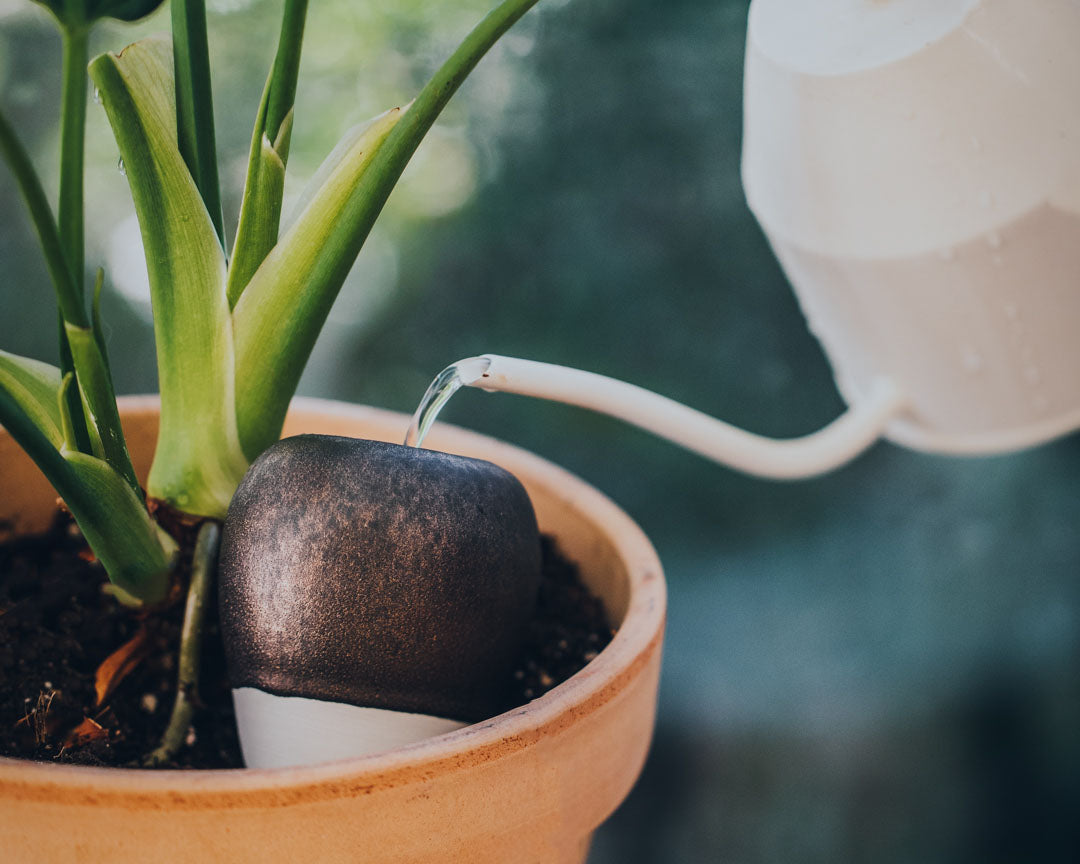
When it comes to caring for your indoor plants, watering is undoubtedly one of the most important tasks. However, it is easy to make mistakes that can lead to the death of your plants. Here are some common mistakes to avoid when watering your plants!
Watering too frequently
If you water your plants too frequently, this can lead to various problems that can affect their health and growth.
Too much water can cause root rot and encourage the growth of bacteria and fungi, while a lack of water can weaken plants and reduce their growth. It is therefore important to find a balance by watering regularly, but not too often. The water needs of plants depend on many factors, such as the type of plant, the size of the plant, sun exposure, soil type and climatic conditions.
Make sure to check the soil regularly to ensure it is not too moist. To avoid overwatering, there are several tricks to regulate watering autonomously, such as oyas.
Watering with water that is too hot or too cold
Watering your plants with water that is too hot or too cold can affect their health and growth. There are several reasons why it is essential to water your plants with water at room temperature. If the water is not at room temperature, this can cause thermal shocks and damage your plants. At too high a temperature, water can damage the roots by deteriorating the cells that make them up, which can lead to the death of the plant. As for cold water, it can slow plant growth by reducing their rate of photosynthesis, but also can cool the soil and make it difficult for the roots of the plants to absorb nutrients. The plant therefore risks slower development and becoming less vigorous.
If you are not sure of the water temperature, you can test it (carefully) by dipping your hand or finger into it. If the water is comfortable for you, it should be fine for your plants.
Watering the leaves instead of the soil
It is tempting to water the leaves of your plants, especially if they seem dry and yellowed. However, it is important not to forget to water the soil of your plants.
Water that stagnates on the leaves can make them soft and fragile, which can lead to their falling off and weakening the plant. Water on the leaves can also attract pests such as slugs and snails, which can damage the plants. Finally, hot water on the leaves can cause burns and damage the cells of the plant, which can lead to a loss of foliage and a decrease in the plant's growth. It is therefore important to make sure that the water reaches the soil when watering the plants.
Your plants' roots are their primary means of absorbing the water and nutrients they need. If you only water the leaves, you risk leaving the roots dry and causing irreversible damage to your plant.
Watering with chlorinated water
It is not recommended to water plants with chlorinated water as chlorine can be harmful to certain plants. Chlorine is used in tap water to disinfect the water and kill bacteria and other unwanted microorganisms. However, it can also kill the beneficial microorganisms present in the soil, which can affect the health of the plants.
Chlorine can also irritate the leaves and roots of plants, which can lead to a loss of foliage and a decrease in the plant's growth. Furthermore, chlorine can react with other elements present in the soil, such as iron and manganese, which can lead to discolouration of the leaves and a weakening of the plant.
If you use tap water to water your plants, let it rest for a few hours before using it. The chlorine will evaporate and the water will be safer for your plants ;)
Watering too hard or too gently
Watering too forcefully can prevent the water from seeping into the soil and reaching the roots. Watering too gently may not hydrate the plants sufficiently. It is therefore important to find an appropriate water flow that allows the water to seep into the soil and reach the roots without being too forceful. You can use a drip irrigation hose or a sprinkler to achieve a steady and moderate water flow.
Your indoor plants will thrive and you'll be able to enjoy their beauty for a long time!


